
FAQ Naga Surf School
Surfing is an exciting adventure, but it can also raise plenty of questions—especially if it's your first time. From choosing the right lesson and understanding Bali's wave conditions to knowing what to bring and what to expect, we're here to help. To make your experience as smooth and enjoyable as possible, we've put together a list of the most frequently asked questions about surfing and our lessons at Naga Surf School Bali.
If you can't find the answer you're looking for, please don't hesitate to contact us. Our friendly team is always happy to assist and provide the information you need before booking your surf lesson. We look forward to helping you catch your first wave and enjoy an unforgettable surfing experience in Bali!
What is included in our surf lessns?
Naga Surf School Bali provides all necessary equipment and clothing for your surf lessons assuring you that you have a great surf experience, please read what Naga Surf School supplies.
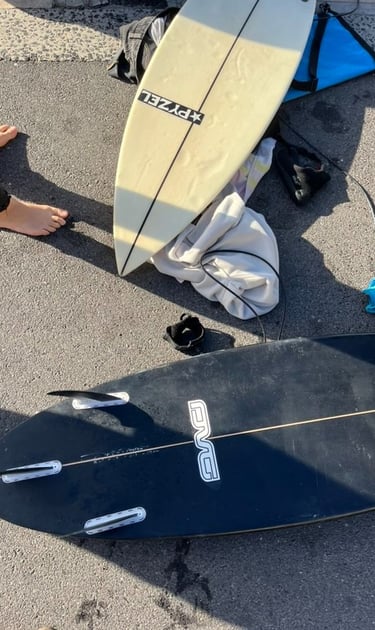
What We Supply :
Free use of public toilets
Free use of public showers
Free use of beach chairs when you drink soft drink
Free use of beach bean bags
Free security safe for valuables
Free Carry bag storage
Surf shirts - rashies NOTE: We don't have kids sizes
Surf equipment - surfboard and leash
Surf coach (s)
BRING THE FOLLOWING
Small change so you can buy items from the beach vendors.
Sunscreen (SPF 50+ please apply at your hotel).
Towels (each)
SWIM WEAR
Please make sure you have your swimwear on before coming to Naga Surfing School - we don't have change rooms
CAR OR MOTORBIKE PARKING
There is parking on the main road please be aware that there is a fee.


What time are the sirf lessons?
Please note that all lesson times are approximate and may vary by up to one hour depending on the current surf, tide, and weather conditions. At Naga Surf School, safety always comes first. Our ISA-certified instructors carefully assess the ocean conditions each day to ensure every lesson is conducted at the safest and most suitable time, providing you with the best possible surfing experience.
These lesson time are an estimate only. Lesson time may change by up to 1 hour Accordance with current surf condition
How difficult is itu to learn how to surf?
Surfing Tips In Bali
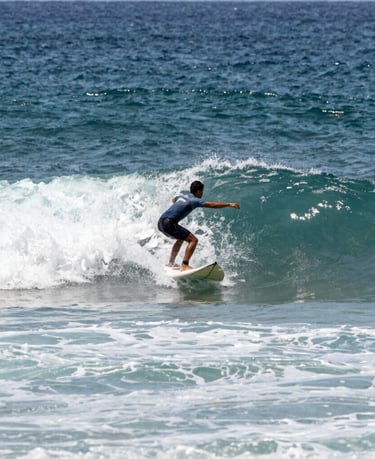
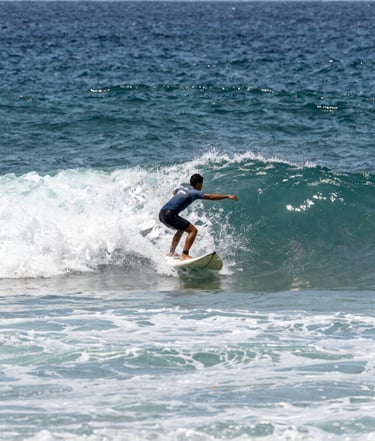
Surfing can be a challenging sport. Some say it’s just like snowboarding but this is not quite true as the ocean is fluid while snow is essentially water in solid form.
However, being able to snowboard or skateboard and having a good sense of balance is a definite bonus. We also find that people who do sports such as yoga, gymnastics and pilates have a good sense of balance and an added advantage. But surfing is a test of wills and as much of a mental sport as it is physical. An attitude of ‘I can do it’ and ‘I won’t give up’ is a great ally when you start to learn how to surf.
With the right coaching and correct techniques, Naga Surf School’s instructors will guide you to catch small waves and stand-up. If you book a single surf lesson and you don’t stand up we will give you another class for free (depending on availability). Offer does not apply to two or three day bookings.
How difficult is itu to learn how to surf?
Ocean Safety - Important for your safety!
Naga Surf School wants your trip in Bali to be safe, so please read the following as it may help you one day. Dangerous Surf Conditions, Big Waves. Big waves have an immense amount of force and should be treated with great respect!
If you go to a beach and it looks or sounds big, it’s probably BIG so don’t go into the ocean. Listen to your heart most of the time and it will keep you out of trouble.
Lateral Currents
Lateral (also known as "littoral") currents flow parallel to the beach. They range in speed from fast-flowing to subtle movement. These currents pose little threat to the average swimmer, but weaker swimmers can be pulled into rip currents and heavy surf simply by the force of lateral currents.
Rip Currents
Rip currents are the major cause of surf accidents. They are characterized by a strong flow of water rushing back out to sea. Rip currents occur when large amounts of water accumulate near the shore due to natural wave action. Since water seeks its own level, the broken waves take the path of least resistance. This powerful flow of water can pull even strong swimmers into deep waters. Generally, the size and strength of the rip currents are in proportion to the size and frequency of the wave action - the larger the waves, the stronger the rip currents. Depending on lateral currents, rip currents can be fixed at one location or can occur at more than one point along the beach. Large rip currents can be recognized by the sandy discoloration of the water
Backwash
Backwash usually occurs with high tides on beaches that rise sharply away from the water's edge. Backwash occurs when the water remaining on the beach returns forcefully to the surf beneath later incoming waves. It is particularly dangerous for small children playing near the water's edge. Even in the short distance between breaking waves and deep water, backwash is powerful enough to knock people off their feet.
Shore Break
Shore breaks can occur at high tide when heavy surf conditions cause large waves to break on the beach with little or no water under them. Shore breaks can be particularly dangerous to a swimmer who is caught in such a wave because the wave can slam the swimmer on the beach, causing injury. Shore breaks are the most frequent cause of serious back, neck and shoulder injuries at the beach. Avoid body surfing during shore break conditions.
Shore Break
Shore breaks can occur at high tide when heavy surf conditions cause large waves to break on the beach with little or no water under them. Shore breaks can be particularly dangerous to a swimmer who is caught in such a wave because the wave can slam the swimmer on the beach, causing injury. Shore breaks are the most frequent cause of serious back, neck and shoulder injuries at the beach. Avoid body surfing during shore break conditions.
Swimming Safety Advice
Check with the lifeguard on surf conditions before swimming. If lifeguards give you directions or instructions from the stand, obey them. Never swim alone - use the buddy system. Don't overestimate your swimming ability, especially early in the summer at place where the water is cold. Swimming ability is severely decreased in cold water. Judge your ability to participate in beach activities based on your swimming skills without the assistance of rafts and other flotation devices. Never dive into shallow water, or water of unknown depth. If you are confronted by a large wave and there is not enough time to get away from it, try to dive underneath the wave. Keep your body as low as possible until the wave passes over you. Timing is important, dive into the base of the wave just before it breaks. Do not dive if the water is too shallow - instead crouch and keep a low body profile.
If caught in rip currents, relax and swim toward the shore at a 45-degree angle until you are free of the current. If the rip currents are strong, swim parallel with the shoreline in the same direction as the littoral current and then swim diagonally toward the shore. If you are not able to swim out of the currents, call or wave for help. When body surfing, do not ride waves in a straight line toward shore. Instead, surf at an angle to the waves. Stay away from the white water in the wave center to avoid going "over the falls." Never swim while intoxicated. Alcohol impairs judgement, unnecessary risks are taken and a swimmer will tire more easily, increasing the chance of an accident.
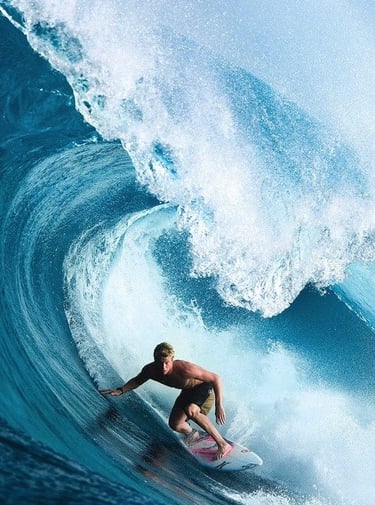
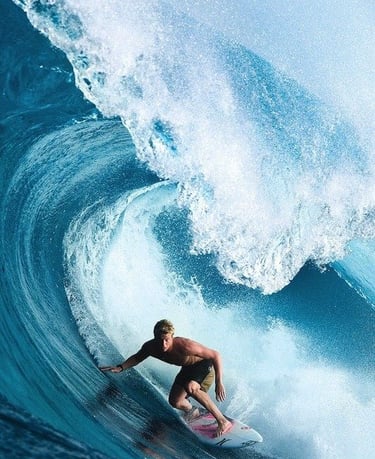
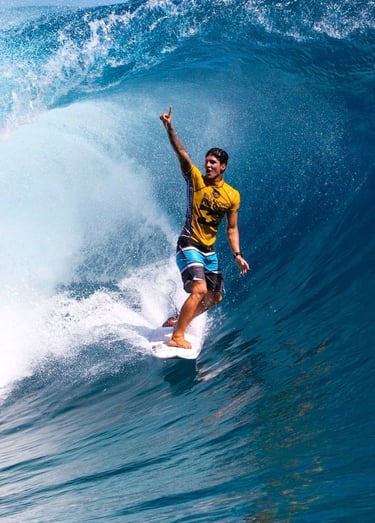
The following is just a guide to a person’s surfing skill levels. When selecting a surf lesson please consider what level you are really at as sometimes people may rate themselves higher or better than what they really are. To ensure your day is even more enjoyable please select a surf lesson or surf trip that suits your ability. Picking a class or a surf trip that is too advanced will only lead to disappointment and possible injury.
What level would be best for me to start surfing?
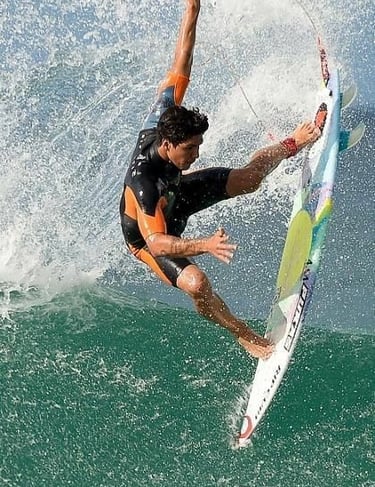
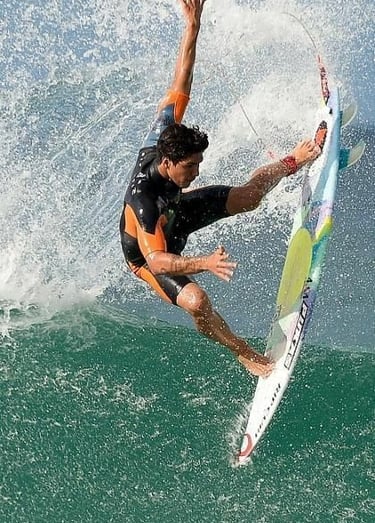
If you need an assessment of your surfing level please ask one of our surf instructors who will be able to give you an honest assessment. Your safety and enjoyment is Naga Surf School’s number one priority. Please also keep in mind that some people have different capabilities – for example some people can stand-up immediately whilst others may take a little longer – don’t let this discourage you. Keep trying and be positive as perseverance is key to getting the hang of surfing.
What is the age limit for surfing?
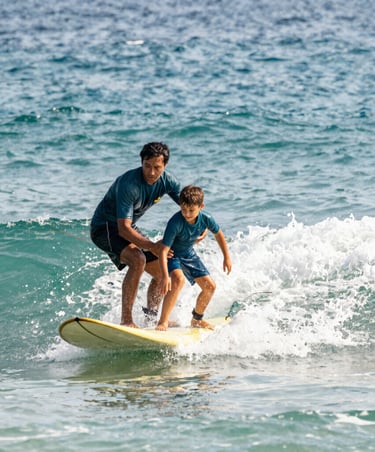
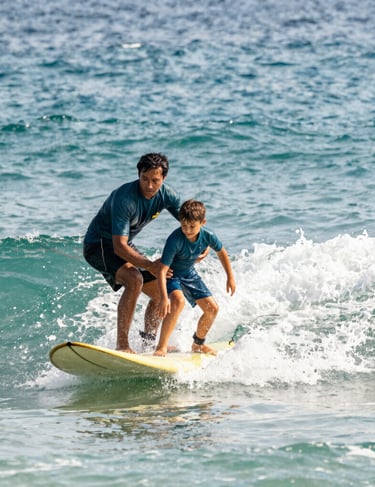
At Naga Surf School, we believe surfing is for everyone. There is no maximum age limit for our lessons, and we welcome anyone who is in good health and eager to learn. For safety and to ensure the best learning experience, we recommend a minimum age of 6 years old. Our ISA-certified instructors carefully tailor each lesson to match every student's age, confidence, and skill level, creating a safe, fun, and unforgettable surfing experience for all.
I’m not too sure if I will enjoy surfing?


We recommend starting with our 1-Day Beginner Surf Lesson if you're new to surfing or simply want to see if it's the right activity for you. This introductory lesson gives you the opportunity to experience the thrill of surfing in a safe, supportive, and enjoyable environment while learning the fundamentals from our ISA-certified instructors. It's the perfect way to build confidence and discover whether surfing is something you'd like to pursue further.
If you enjoy your first lesson and would like to continue improving your skills, you can easily upgrade to one of our multi-day surf packages. We offer 2-day, 3-day, 4-day, and 5-day lesson packages at discounted rates, allowing you to progress at your own pace while receiving consistent guidance from the same team of experienced instructors.
After your first day's lesson, simply let our team know if you'd like to extend your course. There's no pressure to decide in advance—we're happy to help you choose the package that best suits your goals and schedule. Our flexible approach ensures you have the freedom to continue your surfing journey whenever you're ready, making your experience with Naga Surf School both convenient and enjoyable.
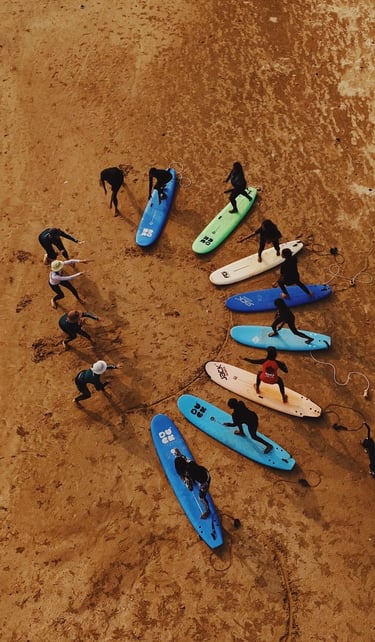
What sort of payment will Naga Surf School Bali accept?
We use Pay Pal or WISE as our preferred method of payments but please we can't accept REVOLT payments
If you prefer to pay by cash, please note that we only accept Indonesian Rupiah (IDR). We kindly ask that cash payments be made at least one day before your scheduled surf lesson to confirm your booking. This allows our team to prepare everything in advance, including your surf equipment, instructor allocation, and lesson schedule, ensuring a seamless, safe, and enjoyable surfing experience with Naga Surf School.
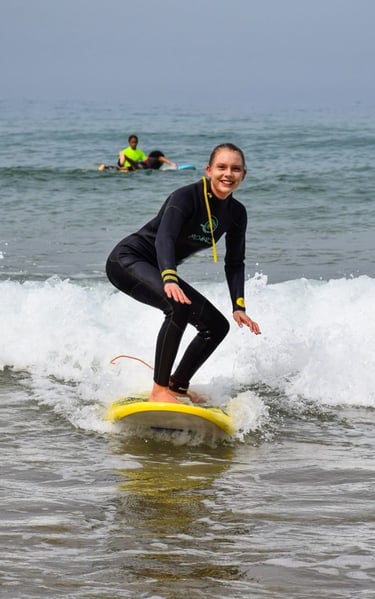
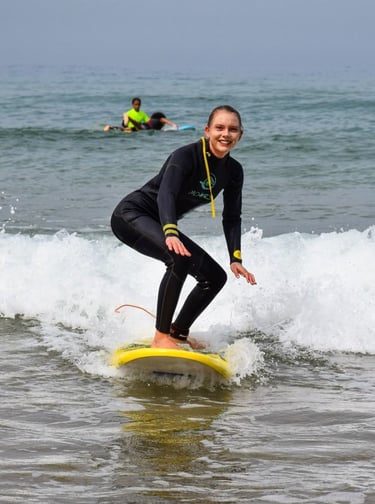
My swimming ability is not very good is that a problem?
At Naga Surf School, your safety is our highest priority. Every surf lesson is conducted under the close supervision of our ISA-certified instructors, who provide continuous guidance and support throughout your session. Whether you're stepping onto a surfboard for the first time or looking to improve your skills, our experienced team is always nearby to ensure you feel safe, confident, and comfortable in the water.
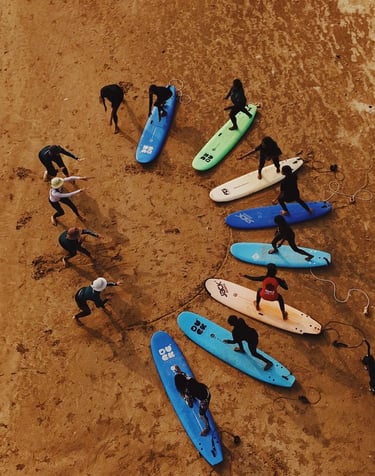
Our beginner surf lessons take place in carefully selected locations with soft sandy bottoms and shallow water, typically no deeper than waist level. This allows you to stand comfortably whenever needed while learning essential surfing techniques. You'll be practicing on gentle, rolling whitewater waves that are ideal for beginners, creating a fun, relaxed, and secure environment to build your confidence.
Before every lesson, our instructors carefully assess the day's surf, tide, and weather conditions to choose the safest area for your session. We also provide a comprehensive safety briefing, demonstrate proper surfing techniques, and ensure all equipment meets high safety standards. With expert instruction, beginner-friendly conditions, and a strong commitment to safety, you can enjoy your surfing experience in Bali with complete peace of mind.
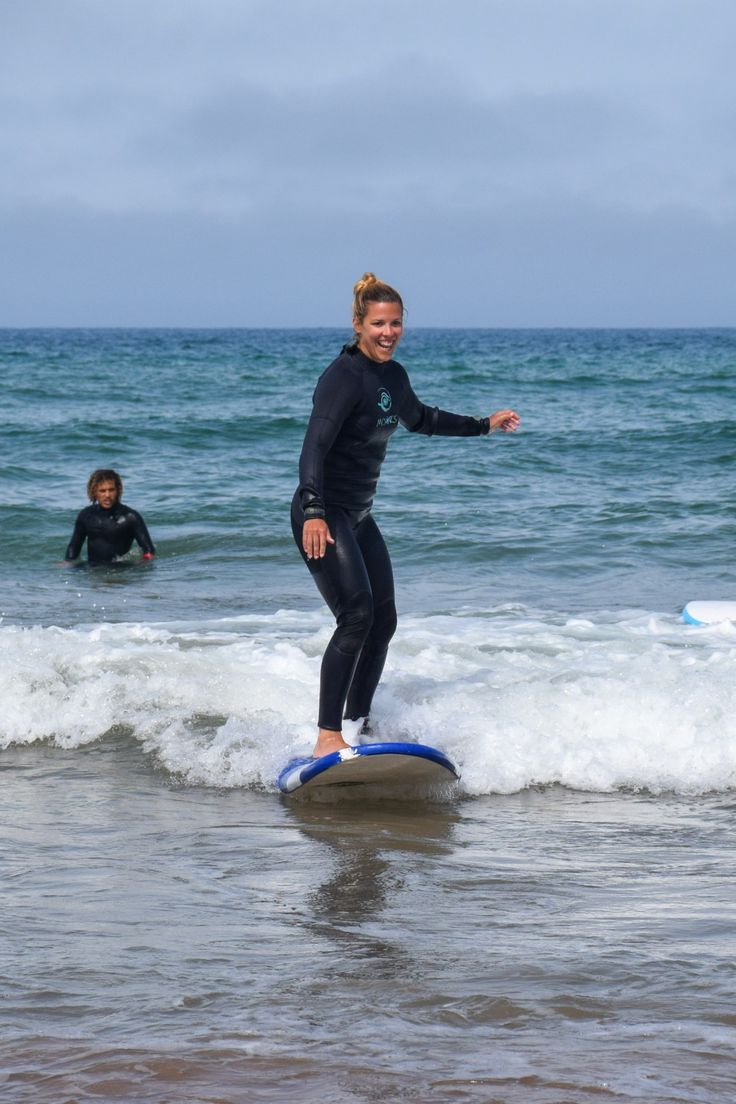
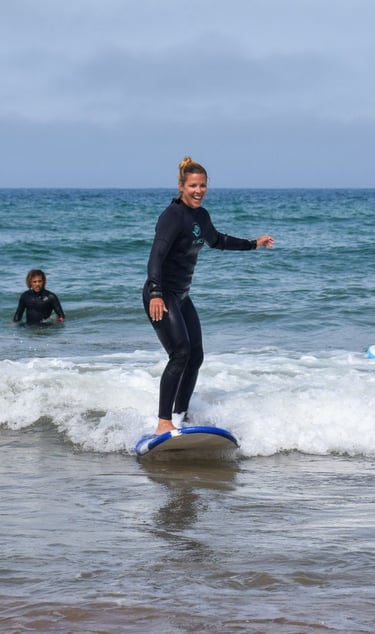
I’m a little scared of the ocean, will surfing help me overcome this fear?
A lot of people fear of the ocean. It can be hard to surf when you’re afraid of the sea! But there’s good news and there’s bad news: the bad news is that your fear won’t disappear overnight, and it might never completely disappear.
The good news is that your fear can mostly be conquered and turned into healthy respect, which is something that is important when dealing with the ocean. With time and dedication, anyone can turn their fear of the ocean into the pure joy of surfing on four foot waves and beyond!
If you’re not comfortable in the ocean, you might want to take a couple of weeks to acquaint yourself with the waves. Get yourself a body board and go boogie boarding!
In any event, getting over a fear of the ocean is a gradual process. Always listen to your gut instincts too. Believe me, we know how frustrating it is to sit on the shore for hours debating whether or not to get in the water, and then deciding that it’s too scary and going home with your tail between your legs. It’s demoralizing and disheartening. But it’s also no good to be out surfing under conditions that are uncomfortable for you. Panic is bad, especially in the ocean.
One of the most important thing is to always respect the ocean. She is much more powerful than you think so treat her with caution, care and love and she will open up her arms to you.

Naga Surfing School
Learn to surf safely in Bali with ISA-certified instructors.
Home-Our Service - FAQ's -About US-Contact Us
Contact Us
+62 812-3456-7890
Jl. Poppies Lane I, Kuta, Kec. Kuta, Kabupaten Badung, Bali 80361
Open everyday start from : 06:00 - 18:00
© 2026 Naga Surfing School-Surfing School at Kuta Beach
Safety First – Professional Guidance – Excellent Service